


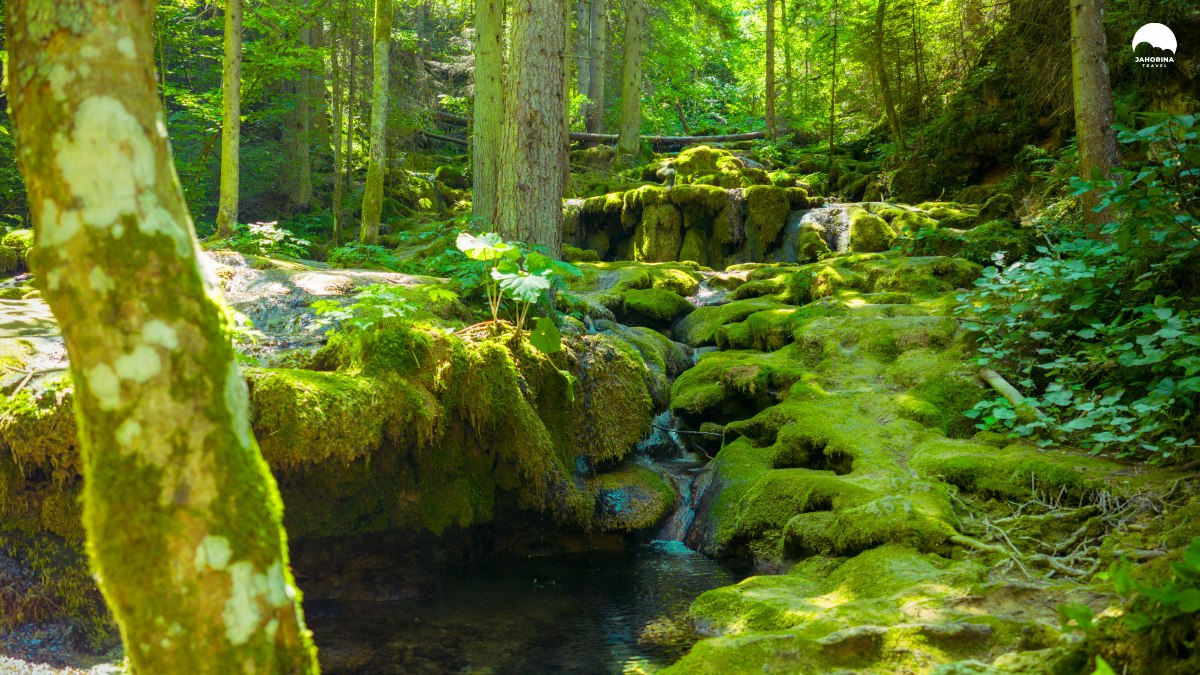
On the northern slopes of Ravna Planina, within the Jahorina massif, lies the Paljanska Miljacka Spring. At first glance, this place attracts visitors with its clear cold water, forest, moss, and a series of small cascades. Yet beneath the surface, a process is taking place that is far more fascinating than it appears.
Here, water literally creates new stone.
Scientists who studied habitats of European importance in the Jahorina area identified the Paljanska Miljacka Spring as a site of active tufa formation. Such springs belong to a special European habitat type classified as 7220 – Petrifying springs with tufa formation (Cratoneurion).
How does water turn into stone?
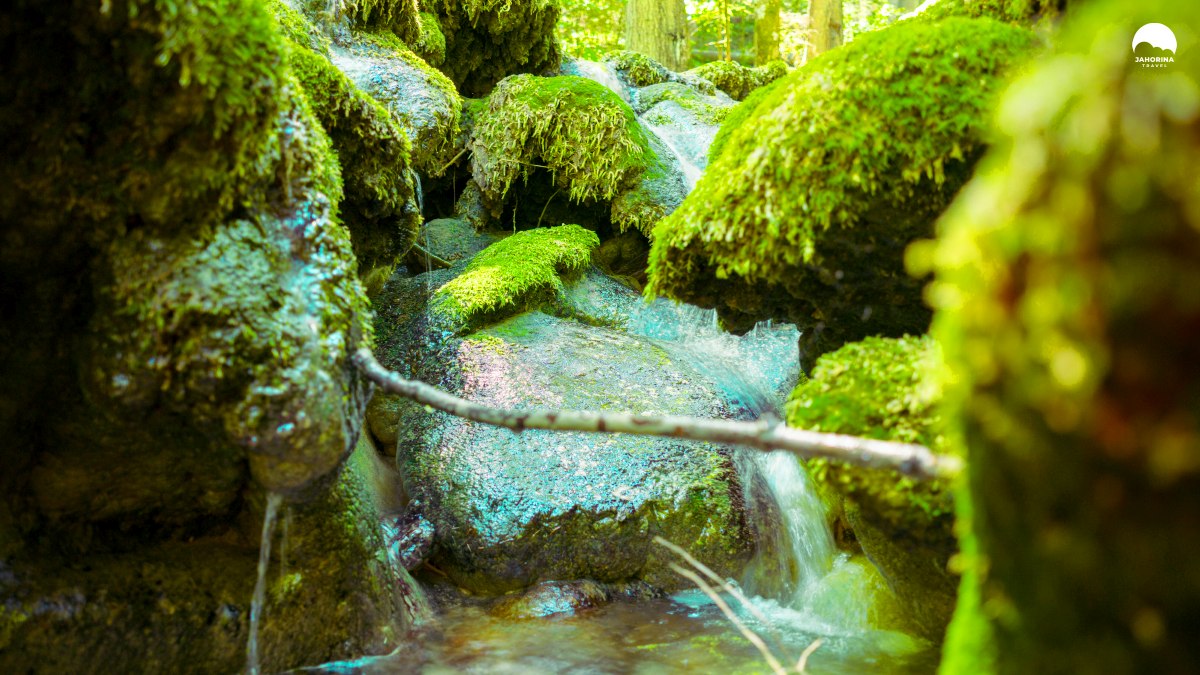 Water passing through limestone bedrock dissolves some of the minerals from the rocks. When groundwater reaches the surface, the temperature, pressure, and amount of carbon dioxide in the water begin to change.
At that point, calcium carbonate starts to precipitate from the water.
It is deposited on rocks, branches, leaves, and especially on the mosses growing beside the water. Layer by layer, the mineral deposits accumulate and over time form a porous rock known as tufa.
As a result, what today looks like ordinary moss covered with a thin mineral layer can gradually become part of a newly formed rock structure.
Moss plays an important role
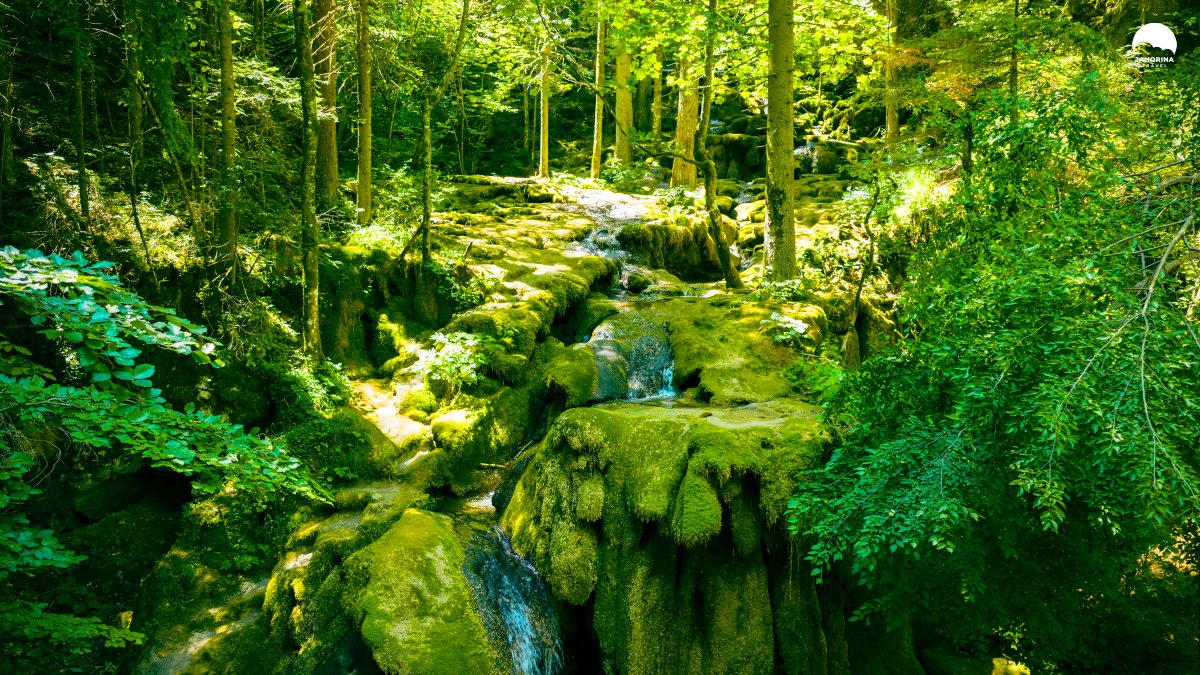 The moss communities of Cratoneurion are particularly interesting. Scientific research in the Paljanska Miljacka area records rich vegetation of these mosses, characteristic of places where tufa is actively being deposited.
In other words, stone does not form here all at once.
Water, minerals, moss, and time work together to build new rock.
That is why habitats like this are extremely sensitive. Changes in the amount or chemical composition of the water, pollution, or physical damage to the moss can disrupt a process that develops over a long period of time.
The process is still active today
One of the most interesting findings from the research is that the zone of active tufa formation is located around 400 metres downstream from the Paljanska Miljacka Spring. The authors specifically note that the process at this location is still active today.
Around 200 metres downstream from the spring, there is also a waterfall, adding further geomorphological and tourism value to the area.
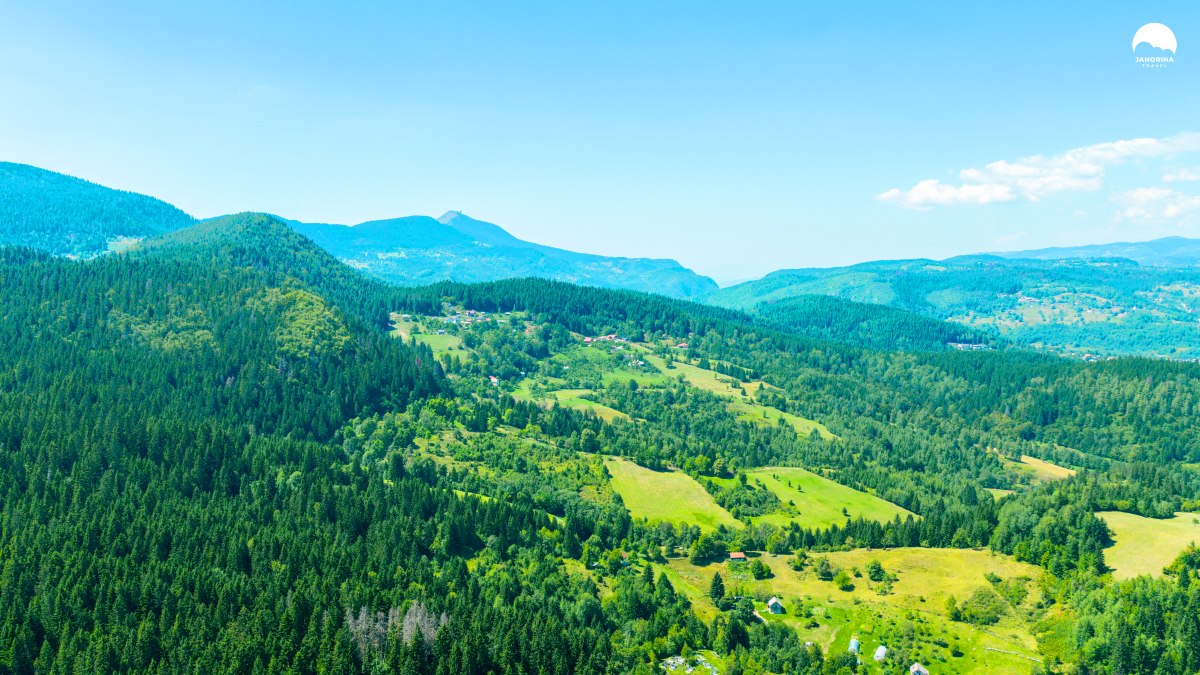
The spring itself is located at approximately 1,010 metres above sea level, on the northern slopes of Ravna Planina. The water emerges through several strong karst springs and remains very cold throughout the year.
A natural laboratory below Jahorina
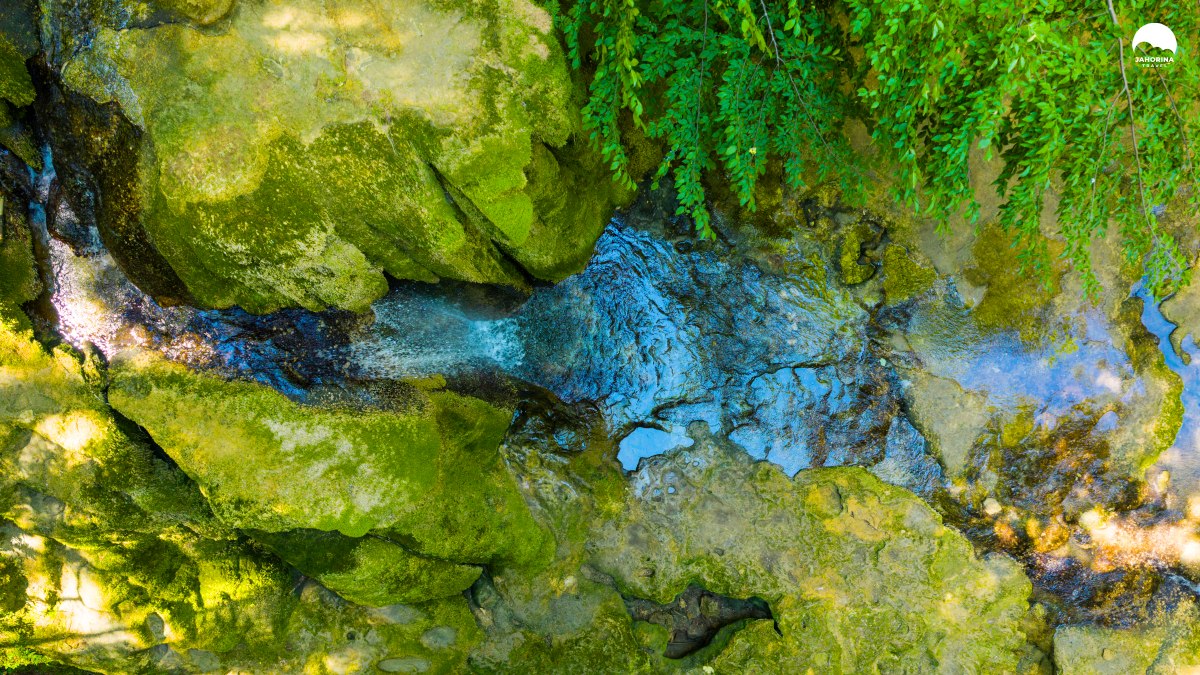
The Paljanska Miljacka Spring is therefore interesting not only as an excursion site or as the place where one of the two Miljacka rivers begins.
It is also a small natural laboratory where the process of rock formation can be observed right before our eyes.
Most of the rocks we see around us were formed thousands or millions of years ago. Here, however, we can observe a completely different story: new stone is still being formed.
The water flows, the moss grows, minerals are deposited — and nature slowly builds tufa.
You can read more about the location itself, access routes, and its natural features in our article Miljacka Spring: A Hidden Gem of Pale on the Slopes of Ravna Planina.
Below Jahorina, there is water that does not merely shape rocks – it creates them.
0 Comment