


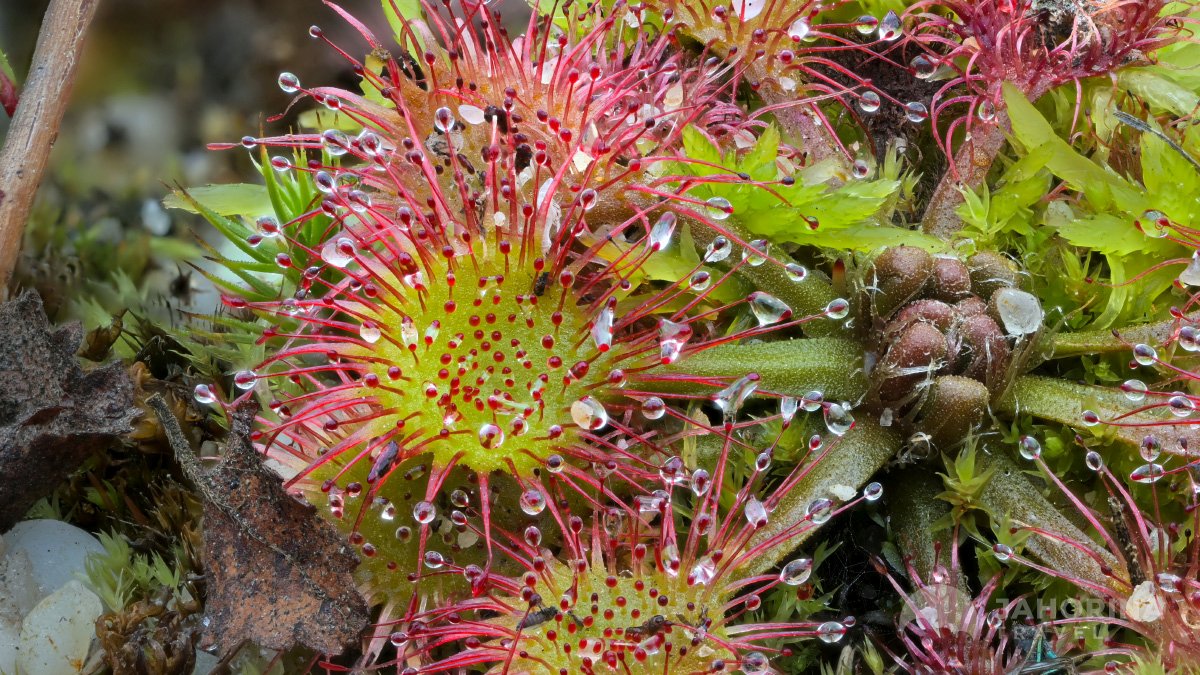
When we talk about the plant life of Jahorina, we most often think of maple, spruce, fir, beech, mountain meadows, or blueberries. Yet, in one wet habitat on this mountain grows a plant we would more readily expect to see in a documentary about some distant marshland – a carnivorous plant.
It is the round-leaved sundew (Drosera rotundifolia L.), a rare and relict species scientifically recorded at the Dugo Polje locality, at approximately 1,380 to 1,400 metres above sea level. In the paper “The Protection of Flora and Vegetation of the Mountain Jahorina”, researchers from the University of East Sarajevo identify its presence as one of the special natural values of this area.
A trap that looks like dew
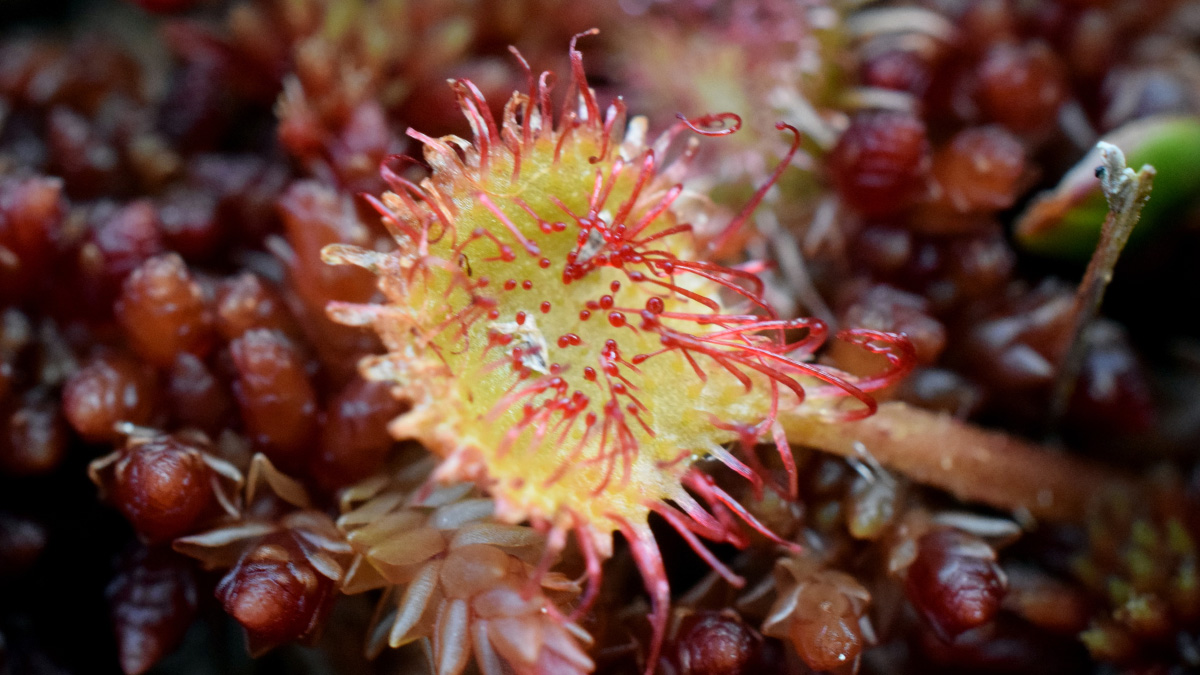
The sundew is a small plant that is easy to overlook. Its rounded leaves are covered with reddish glandular hairs, tipped with clear, sticky droplets that glisten in the light. It is precisely these droplets that gave the plant its name – they look like morning dew.
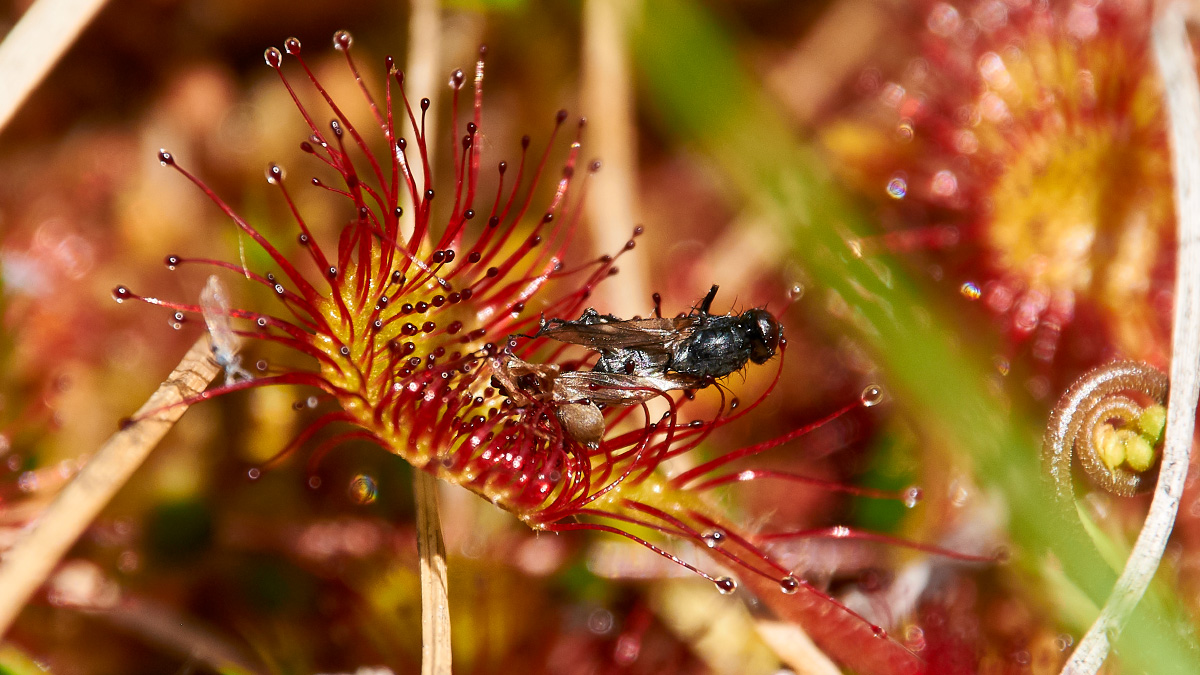
For small insects, however, these droplets are a trap. When an insect becomes stuck to the surface of the leaf, the plant gradually breaks it down with the help of its glands and absorbs nutrients from it. This adaptation allows the sundew to survive on peat soils that are poor in nutrients.
The special world of Dugo Polje
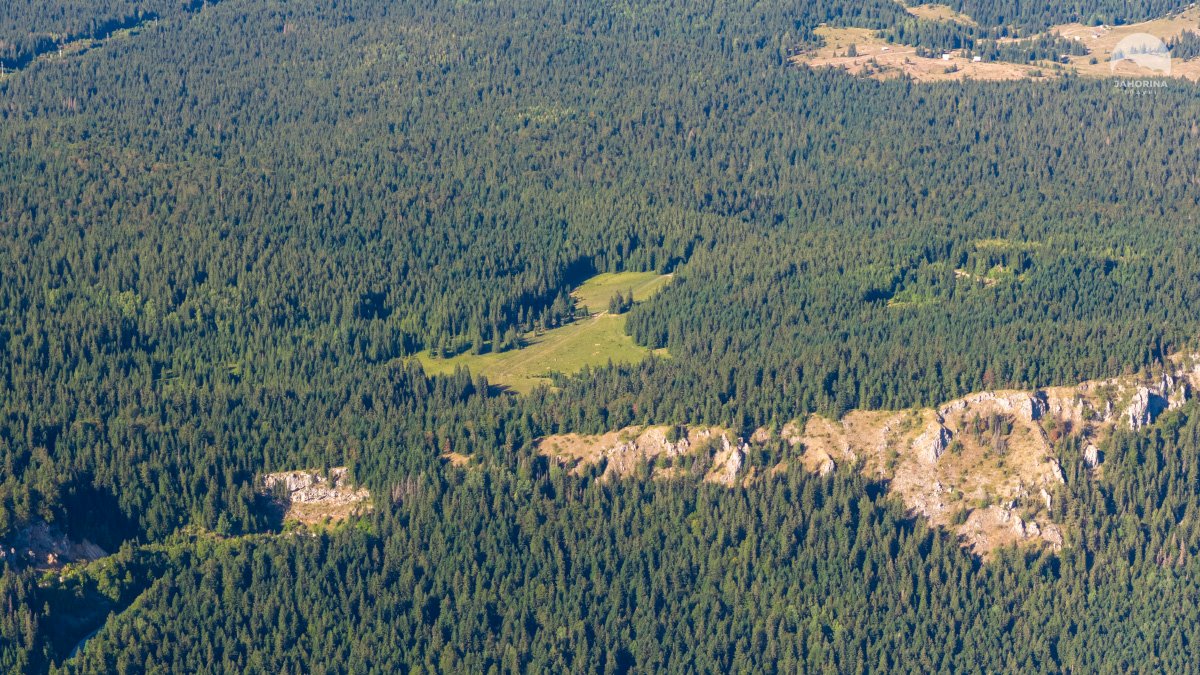
The scientific paper reveals that the place where the sundew grows is itself far from ordinary. The substrate of Dugo Polje consists of Werfen sediments, while the soil is described as eugley with a peat layer approximately 5 to 12 centimetres thick. In smaller areas, sphagnum peat has also developed, formed in association with mosses of the genus Sphagnum.
Alongside the sundew, researchers also recorded individual trees of downy birch (Betula pubescens) at Dugo Polje, another interesting inhabitant of cold and wet habitats. Because of its combination of specific soils, peatlands, and rare species, the study identified Dugo Polje as an area deserving a particularly high level of protection, covering approximately 15.56 hectares. The authors recommend monitoring, further scientific research, and visits by smaller groups for educational purposes.
A later study of habitats of European importance on Jahorina additionally showed that the mountain contains active raised bogs, a habitat considered especially valuable and sensitive. In our region, such peatlands represent remnants of ecological conditions that date back to colder periods of the past and are located near the southern limit of the distribution of this type of ecosystem.
Jahorina hides much more than we notice at first glance
 The sundew is just one detail in the extraordinary botanical richness of the mountain. The same scientific paper lists as many as 1,159 plant taxa on Jahorina, which is more than one fifth of the total number of plant species recorded in Bosnia and Herzegovina at the time. In addition, approximately 180 moss taxa were also recorded. Systematic study of Jahorina’s flora dates back to the work of Fiala in 1893 and 1895.
That is why the story of this small carnivorous plant is much bigger than the unusual species itself.
Just a few centimetres above the peat soil lives an organism that has developed a completely different survival strategy: while other plants obtain their nutrients only from the soil, the sundew can also obtain them from an insect that lands on its leaf.
And this tiny, almost unnoticeable predator grows right here – on Jahorina.
0 Comment