


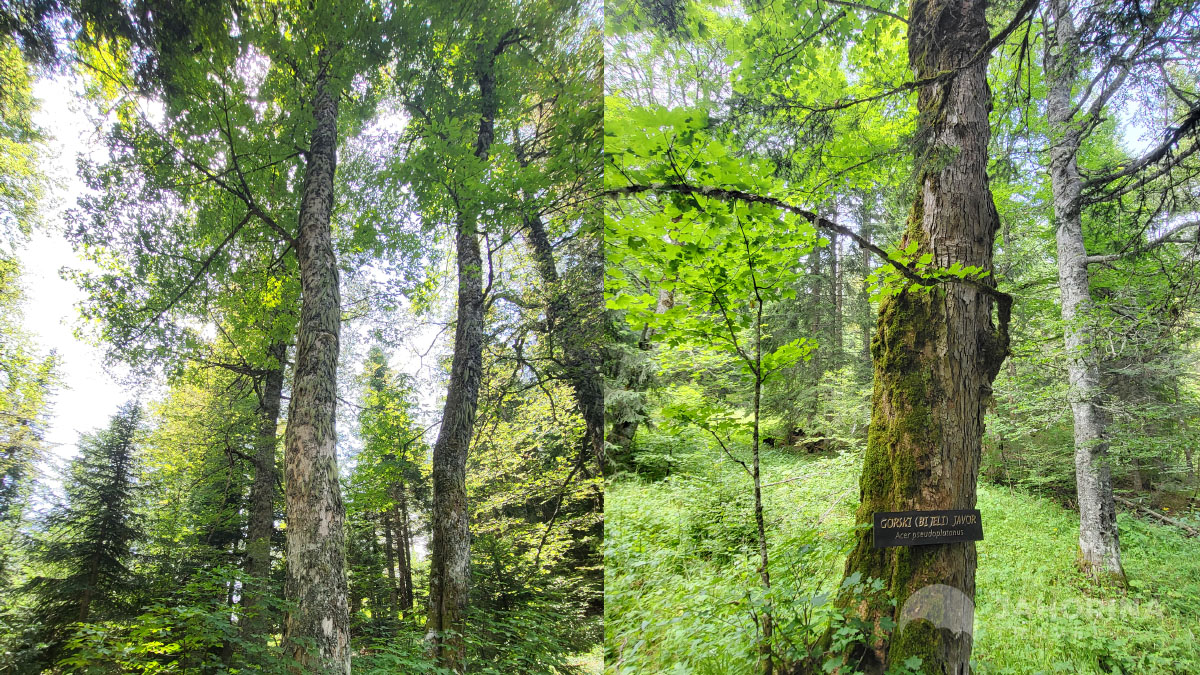
When people think of the forests of Jahorina, spruce, fir and beech are usually the first trees that come to mind. Yet among them grow trees that have attracted the attention of botanists for more than a century. Scientific research on Jahorina records five species of maple, but two stand out in its higher mountain and subalpine zones: the sycamore or mountain maple (Acer pseudoplatanus) and the Heldreich’s, or Greek maple (Acer heldreichii).
Sycamore maple – a giant among mountain trees
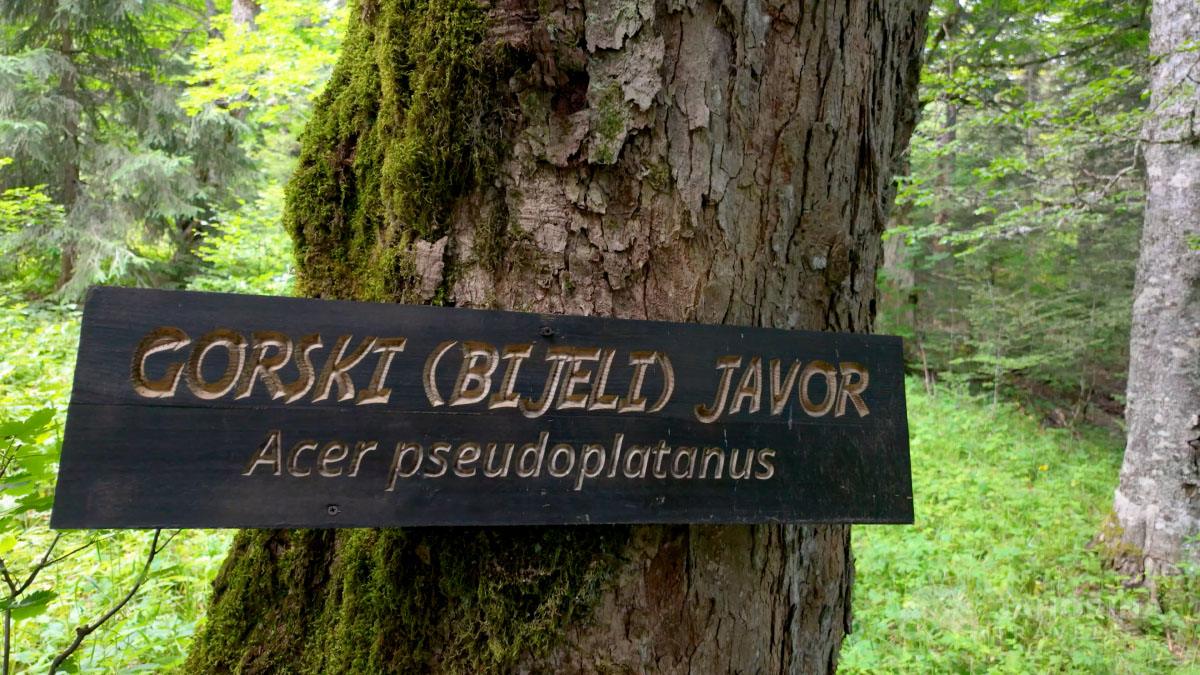
Acer pseudoplatanus is one of Europe’s largest deciduous trees. In favourable conditions, it can reach 30 to 35 metres in height, while individual specimens may grow to around 40 metres. Its lifespan is often measured in centuries, with scientific literature citing approximately 350 to 500 years.
Older trees are easy to recognise by their bark. While relatively smooth on young maples, it gradually begins to flake off in irregular scales and plates, giving the trunk the appearance of old armour. Beneath the broad crown is a highly branched root system, which helps the tree adapt well to windy mountain environments.
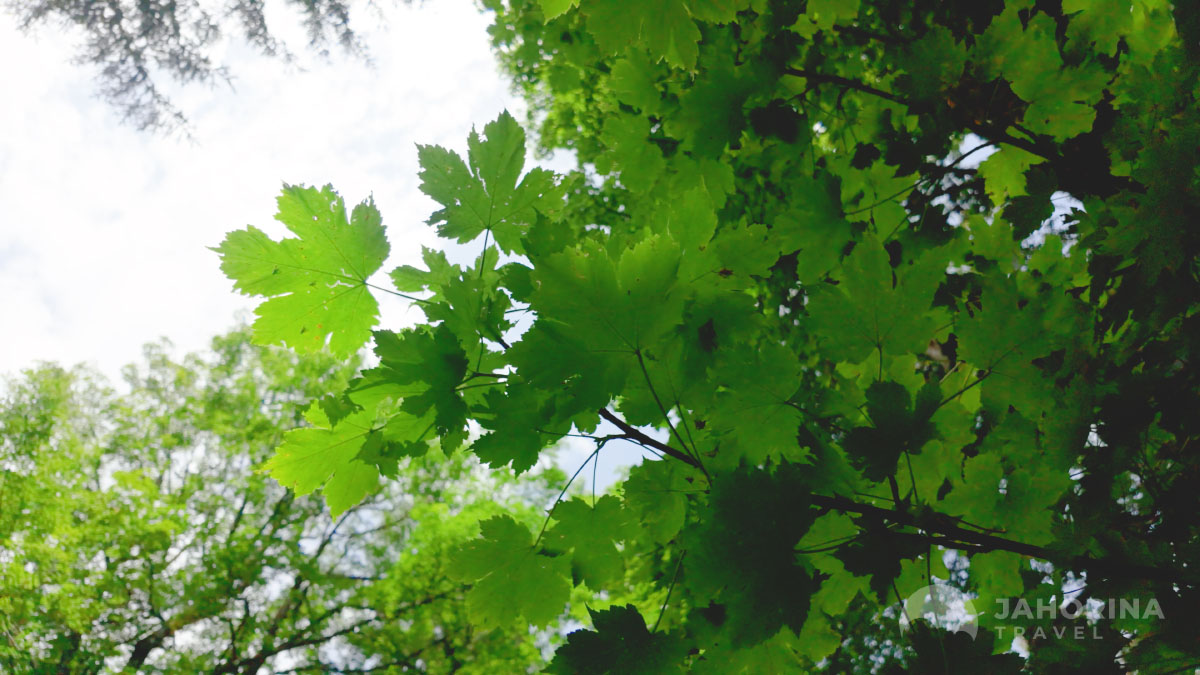
But the sycamore maple is more than just an impressive tree. On steep terrain, its roots contribute to soil stabilisation and erosion reduction, while fallen leaves help create high-quality humus and support nutrient cycling in the forest. Modern research also highlights its contribution to biodiversity and water regulation in forest ecosystems.
Its light-coloured, high-quality wood has been valued in woodworking for centuries. Particularly interesting is the fact that maple with a characteristic wavy grain is highly prized by makers of violins and other string instruments.
Heldreich’s maple – a Balkan relict of high Jahorina
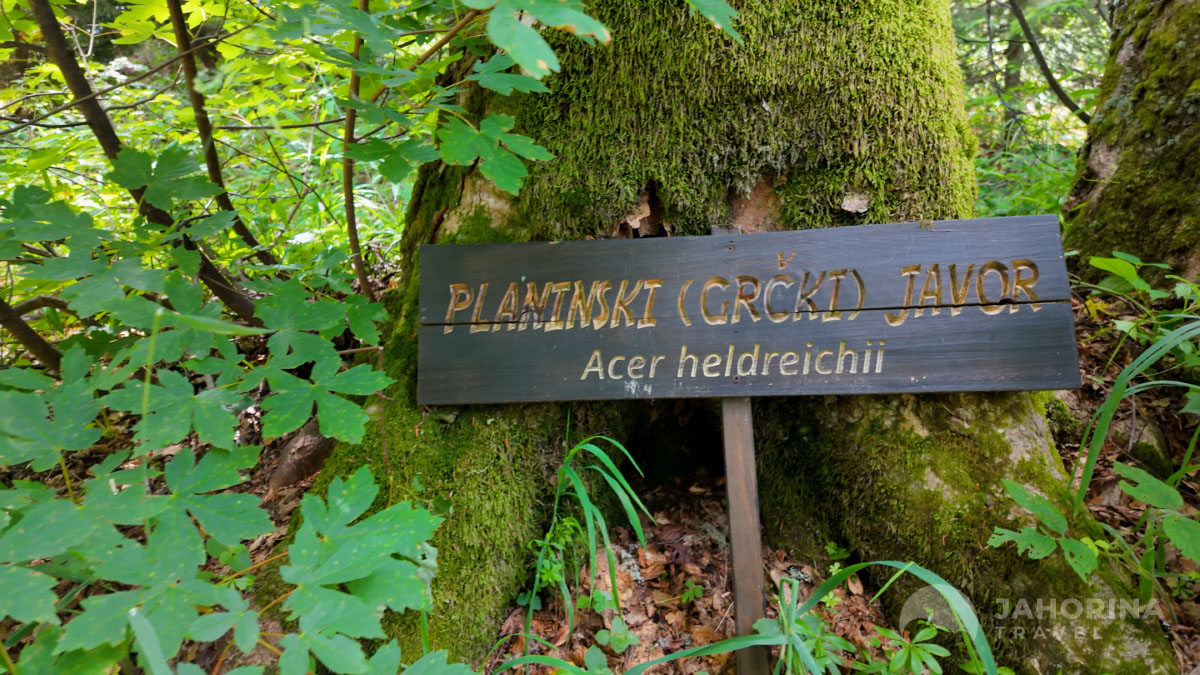
An even more unusual inhabitant of Jahorina is Acer heldreichii. In scientific literature it is known as the Heldreich’s or Greek maple, a Balkan subendemic species that scientists also describe as a Tertiary relict – a remnant of much older flora that managed to survive major climatic changes throughout geological history. Jahorina lies in the north-western part of its natural range.
Its presence on Jahorina was documented very early. A 1964 study by botanist Radomir Lakušić brings together older herbarium records: a specimen from Jahorina was recorded as early as 1896, while later records come from Ravna Planina, Trgule, Poljice and other locations, at elevations of up to approximately 1,700 metres.
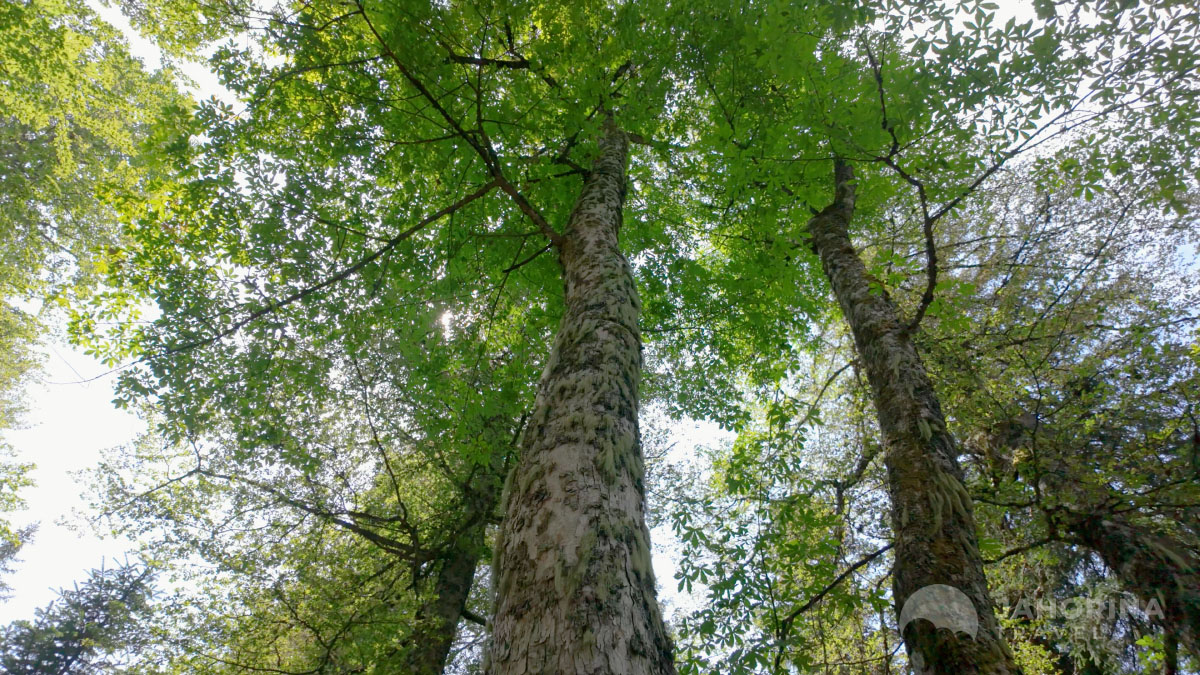
A modern study published in 2023 once again examined this species on Jahorina. Researchers analysed 31 trees here; the average height was around 19 metres, while the tallest measured tree reached 25.1 metres. Heldreich’s maple thrives particularly well on cooler, wetter north-eastern exposures and in the subalpine zone.
In such an environment, snow remains for a long time, the growing season is short, and conditions are harsh enough that many tree species can no longer thrive. This is precisely where Heldreich’s maple shows its value: it protects the soil from erosion and improves ecological conditions for other plant species.
Look closely when walking through Jahorina
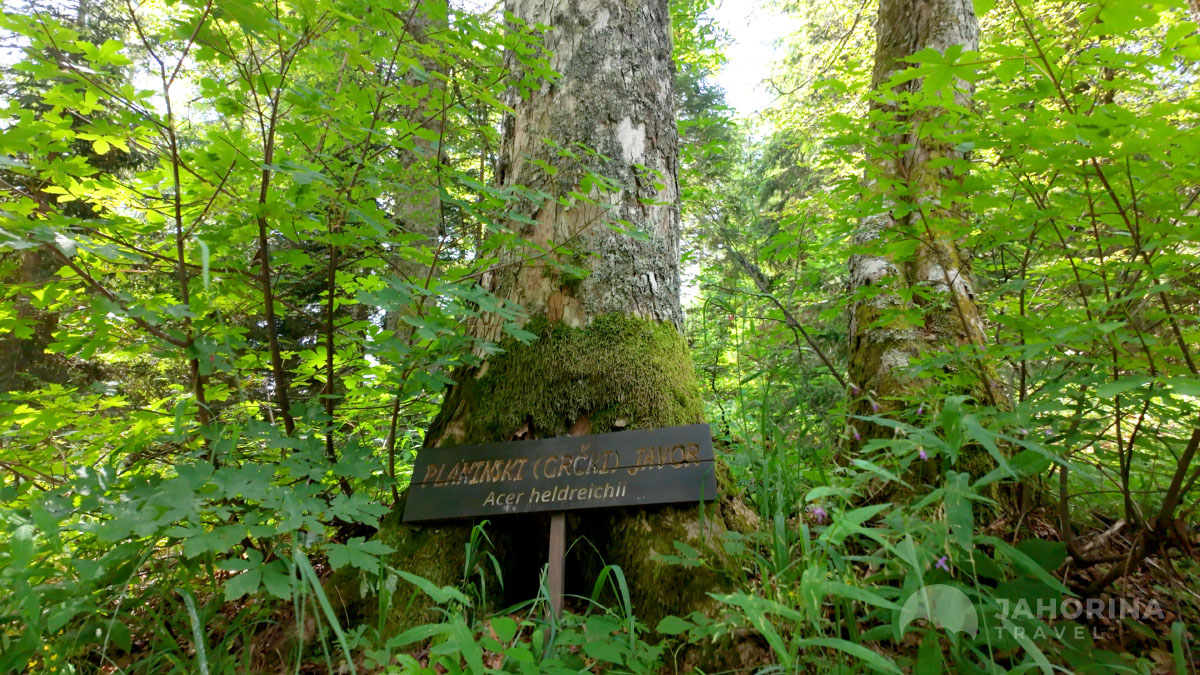
In the higher forest zones of Jahorina, especially above around 1,300 metres, scientific literature records old trees of both maple species. Heldreich’s maple has been particularly noted around the locations of Mali Javor and Veliki Javor, as well as in high mixed forests and subalpine beech forests.
So, the next time you walk through the forests of Jahorina, it is worth looking a little more closely. Among the beeches, firs and spruces, there may be a tree that germinated several human generations ago – one of the silent guardians of Jahorina’s mountain soils and natural history.
0 Comment