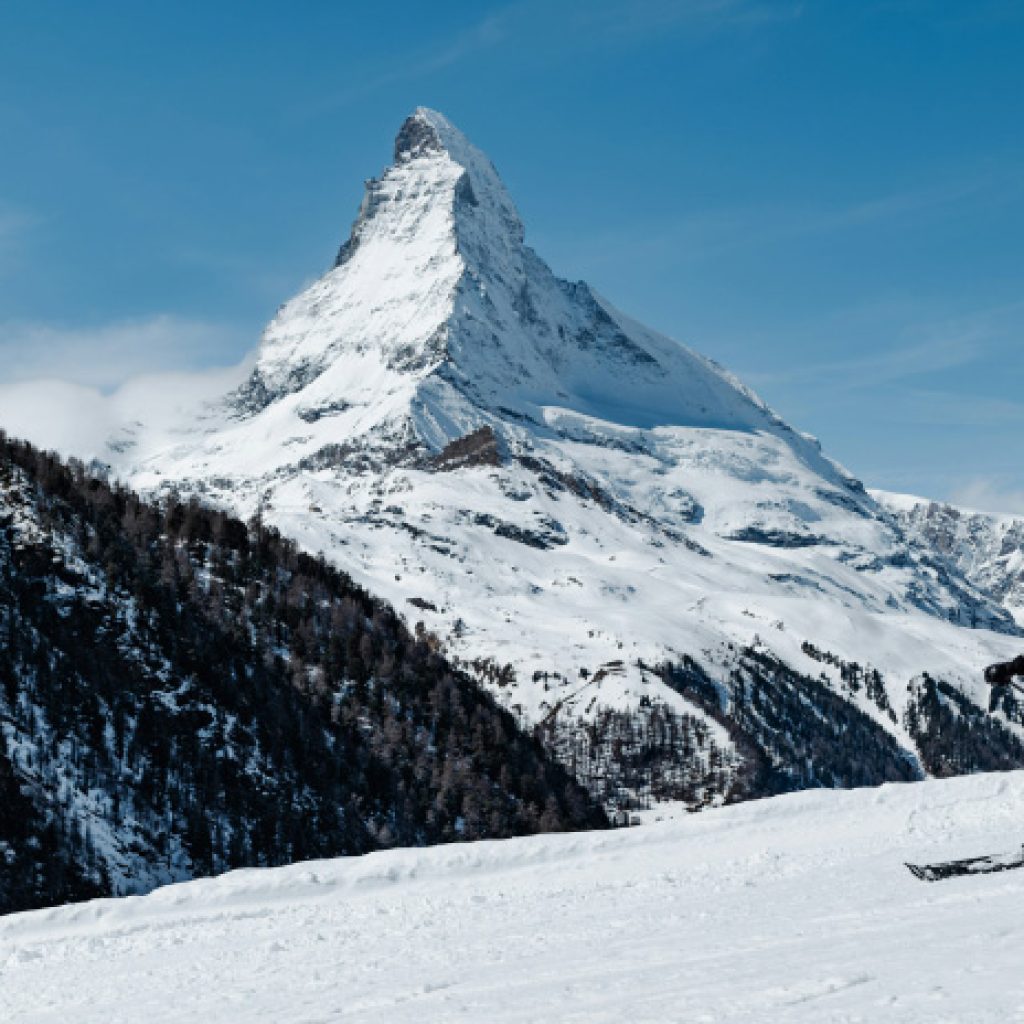

This winter you can ski in Slovenia for less than 40 marks a day, while in the Swiss Alps a one-day pass can exceed 220 KM. Jahorina, with a day pass at 98 marks, sits at almost the same price level as Slovenia’s well-known Kranjska Gora. Serbia’s Kopaonik costs the same. We compared prices at fourteen resorts in the region and across Europe that skiers from our part of the world visit.
Skiing in the Alps does not require crossing an ocean or spending a fortune. Slovenian and Austrian winter resorts can be reached by car, and some ski pass prices are not much higher than those we pay in Bosnia and Herzegovina. In some places they are even lower.
The 2026/27 price lists show huge differences between smaller family resorts and large Alpine centres. They also show that Jahorina, when it comes to the price of a day pass, is no longer that far from part of the European competition.
Skiing in Slovenia from €20
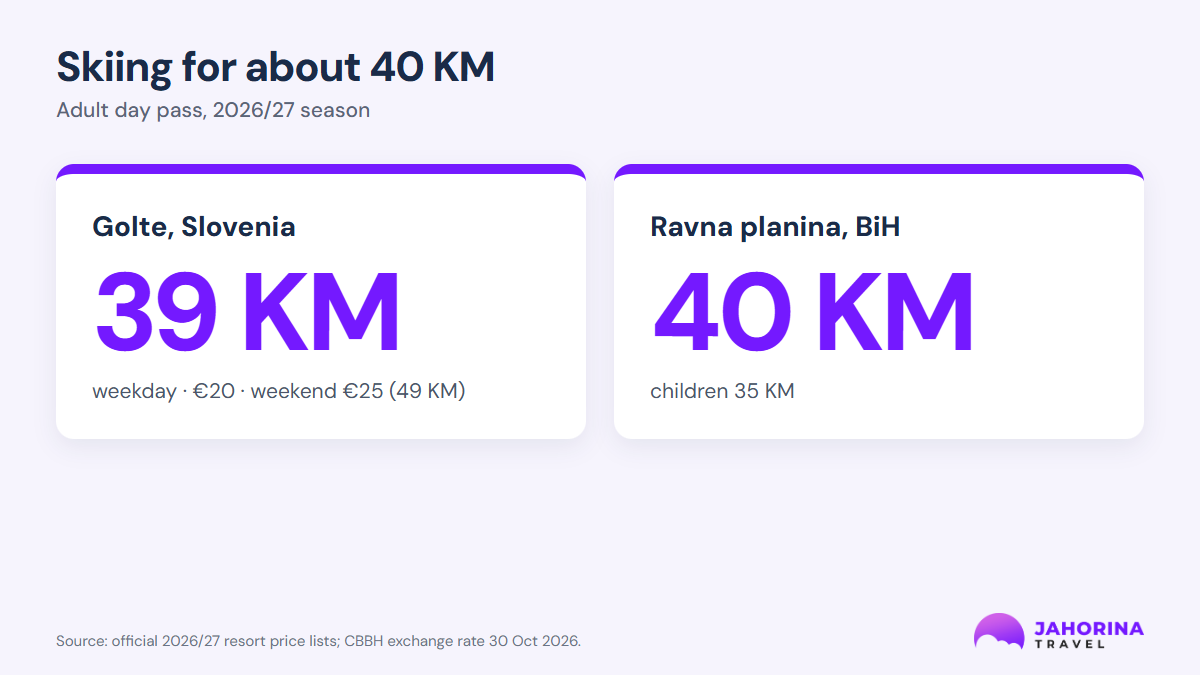
One of the more interesting examples comes from Slovenia. The Golte ski resort has set a day pass price of €20, or about 39 KM, for weekdays outside public holidays and Slovenian school holidays. At weekends and during holidays the pass costs €25, or about 49 KM.
Golte is not a large Alpine complex but a smaller resort with about 12 kilometres of slopes. Still, the price includes a return ride on the gondola, and children under six ski free when accompanied by a parent.
For skiers from Pale and Sarajevo, a comparison with Ravna planina, practically on their doorstep, is especially interesting. According to the published 2026/27 price list, a day pass at Ravna planina costs 40 KM for adults and 35 KM for children.
These are two very similarly priced examples. The difference, of course, lies in distance, travel costs and the layout of the resort itself.
Jahorina and Kranjska Gora almost level
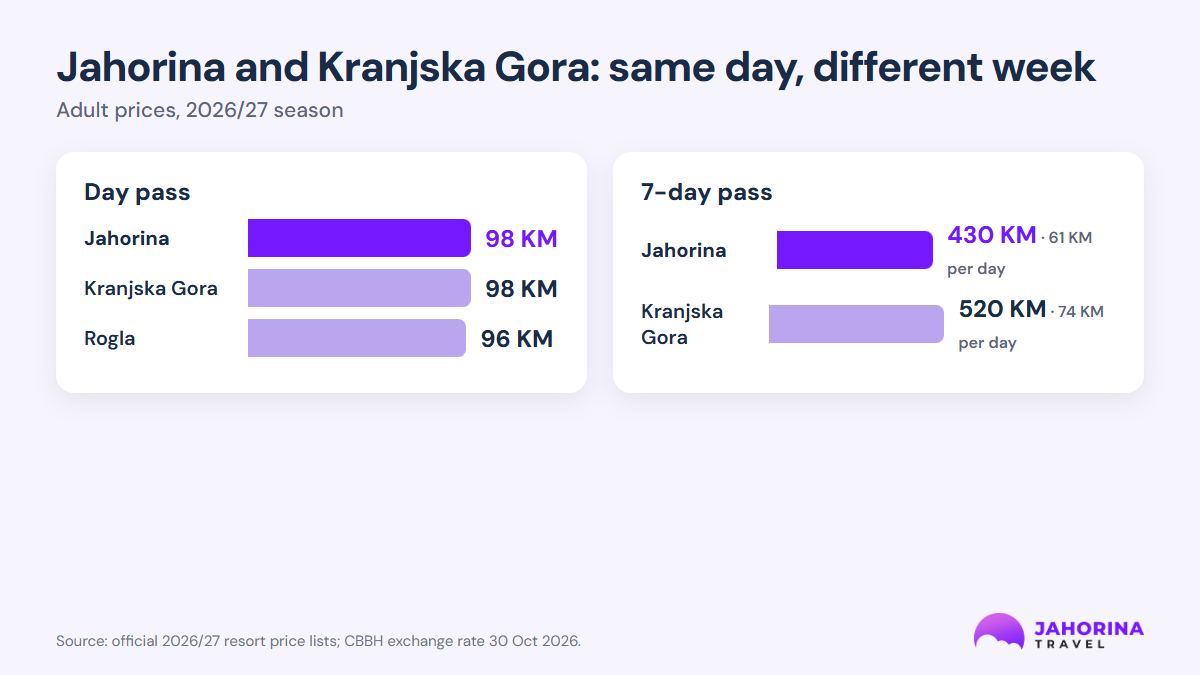
For a day of skiing on Jahorina this winter, adults will pay 98 KM according to the Olympic Centre’s regular price list. Seven consecutive days cost 430 marks, which averages a little over 61 KM per day. According to the Olympic Centre, the season on Jahorina starts on 6 December.
In Slovenia’s well-known Kranjska Gora, an adult day pass for the 2026/27 season costs €50, or about 98 KM. At Rogla, another Slovenian resort, the regular price from 1 December is €49, or about 96 KM.
So a day pass on Jahorina costs almost the same as in Kranjska Gora and slightly more than at Rogla.
For a longer stay, however, the numbers change. A seven-day pass on Jahorina costs 430 KM, while in Kranjska Gora it costs €266, about 520 KM, or around 74 KM per day.
Neither means that a skier gets the same experience for the same money. Kranjska Gora belongs to the Julian Alps, with its own character and tourist offer, while Jahorina has a different slope layout, an Olympic heritage and night skiing.
Serbia and Bulgaria: Kopaonik on a par with Jahorina
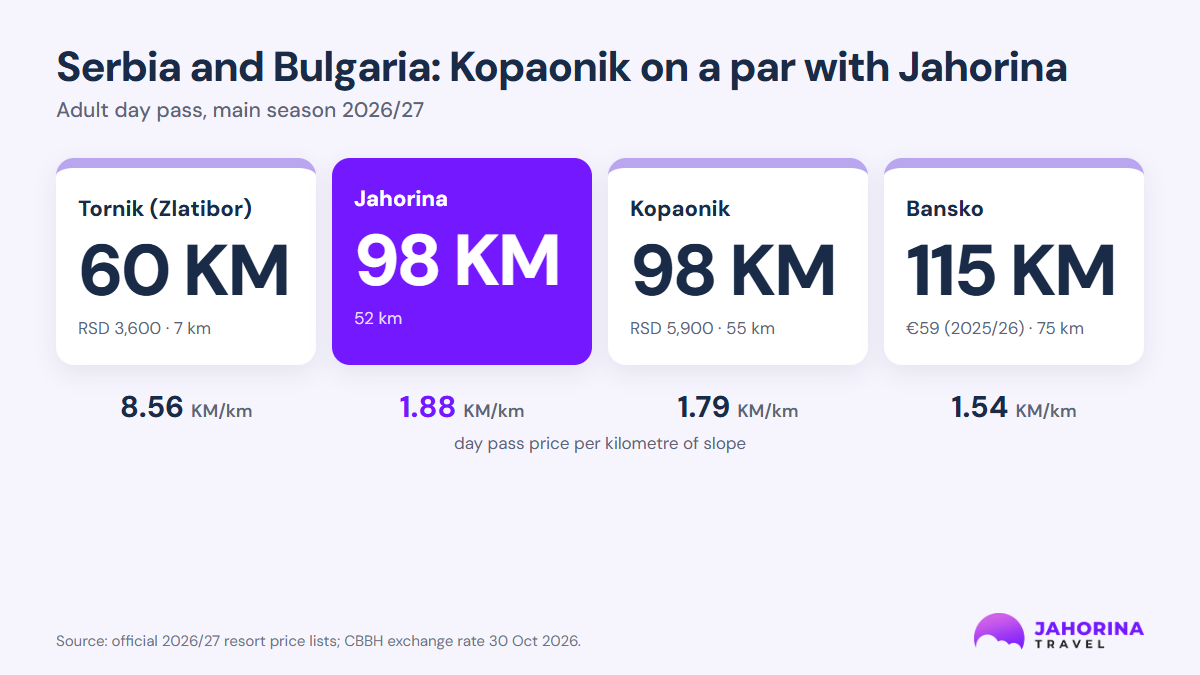
Serbia’s best-known ski resort, Kopaonik, is keeping last year’s prices this season. An adult day pass in the main part of the season costs 5,900 dinars, or about 98 KM, almost the same as on Jahorina. It is cheapest at the start of the season and from late March (5,600 dinars, about 93 KM), and most expensive around the New Year holidays and in mid-February (6,500 dinars, about 108 KM). The two mountains are also similar in slope length: Kopaonik has 55 kilometres and Jahorina 52.
Tornik on Zlatibor, also run by Skijališta Srbije, is much cheaper: 3,600 dinars, about 60 KM, in the main season. But it is also much smaller, with about seven kilometres of slopes.
Bulgaria’s Bansko, increasingly popular with skiers from the region, has not yet published its 2026/27 price list. Last season an adult day pass cost €59, about 115 KM, and the new price list is usually published in mid-December. Bansko has about 75 kilometres of slopes.
From Slovenia to Switzerland: what does a day pass cost?
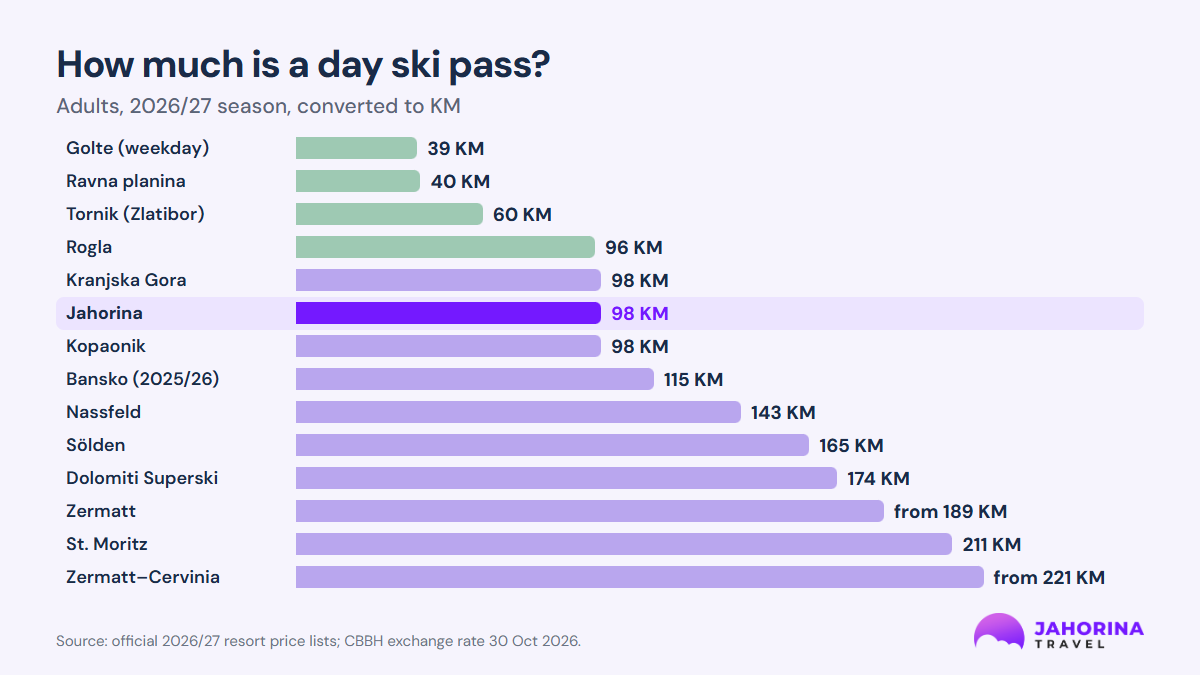
| Resort | Adult price | Approx. in KM |
|---|---|---|
| Golte, Slovenia – weekday* | €20 | 39 KM |
| Ravna planina, BiH | 40 KM | 40 KM |
| Tornik (Zlatibor), Serbia – main season | RSD 3,600 | 60 KM |
| Rogla, Slovenia | €49 | 96 KM |
| Kranjska Gora, Slovenia | €50 | 98 KM |
| Kopaonik, Serbia – main season | RSD 5,900 | 98 KM |
| Jahorina, BiH | 98 KM | 98 KM |
| Bansko, Bulgaria – 2025/26 price*** | €59 | 115 KM |
| Nassfeld, Austria – main season | €73 | 143 KM |
| Sölden, Austria – main season | €84.50 | 165 KM |
| Dolomiti Superski, Italy – high season | €89 | 174 KM |
| Zermatt, Switzerland – from** | CHF 89 | 189 KM |
| St. Moritz, Switzerland | CHF 99.50 | 211 KM |
| Zermatt–Cervinia, international pass – from** | CHF 104 | 221 KM |
*Golte: the €20 price applies on weekdays, except during public holidays and Slovenian school holidays. **Zermatt: the lowest price applies from 1 to 27 November 2026 and from 19 April to 2 May 2027; in the main part of the season the pass costs more. ***Bansko has not yet published its 2026/27 price list, so last season’s price is shown. Kopaonik and Tornik: main season (17–24 December, 8 January – 10 February and 18 February – 23 March). Other prices are the stated regular or seasonal rates. Prices are for the 2026/27 season, converted at the Central Bank of BiH middle rate of 30 October 2026 (€1 = 1.95583 KM, CHF 1 = 2.1208 KM, USD 1 = 1.7573 KM, RSD 100 = 1.6642 KM).
Austria: pricier passes, but a different offer
Among resorts that are relatively accessible for our tourists, Austria’s Nassfeld, also known as Mokrine, close to the Slovenian border, holds a special place.
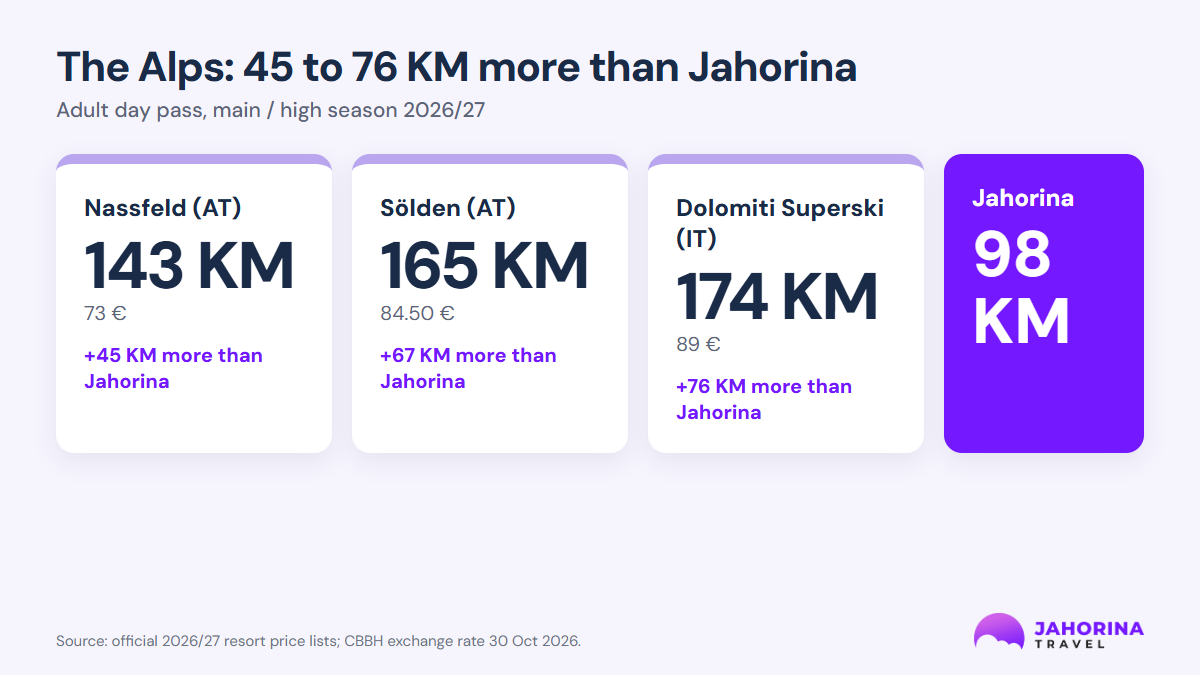
In the main part of the season, from 25 December to 13 March, an adult day pass costs €73, or about 143 KM.
Further towards Tyrol, prices rise. In Sölden, one of Austria’s best-known winter resorts, a main-season day pass costs €84.50, about 165 marks. At the busiest times, around the holidays and in February, the price rises to €86.50, and a pass bought online in advance can be cheaper.
Italy’s Dolomiti Superski, a system that links several ski areas, charges €89, about 174 KM, in high season (20 December to 9 January and 31 January to 20 March). Outside those dates a day pass costs €80.
These amounts are noticeably higher than on Jahorina. However, Alpine resorts operate in a different market, often with much larger linked ski areas and infrastructure for guests who spend a whole week on the mountain.
Where is skiing most expensive?
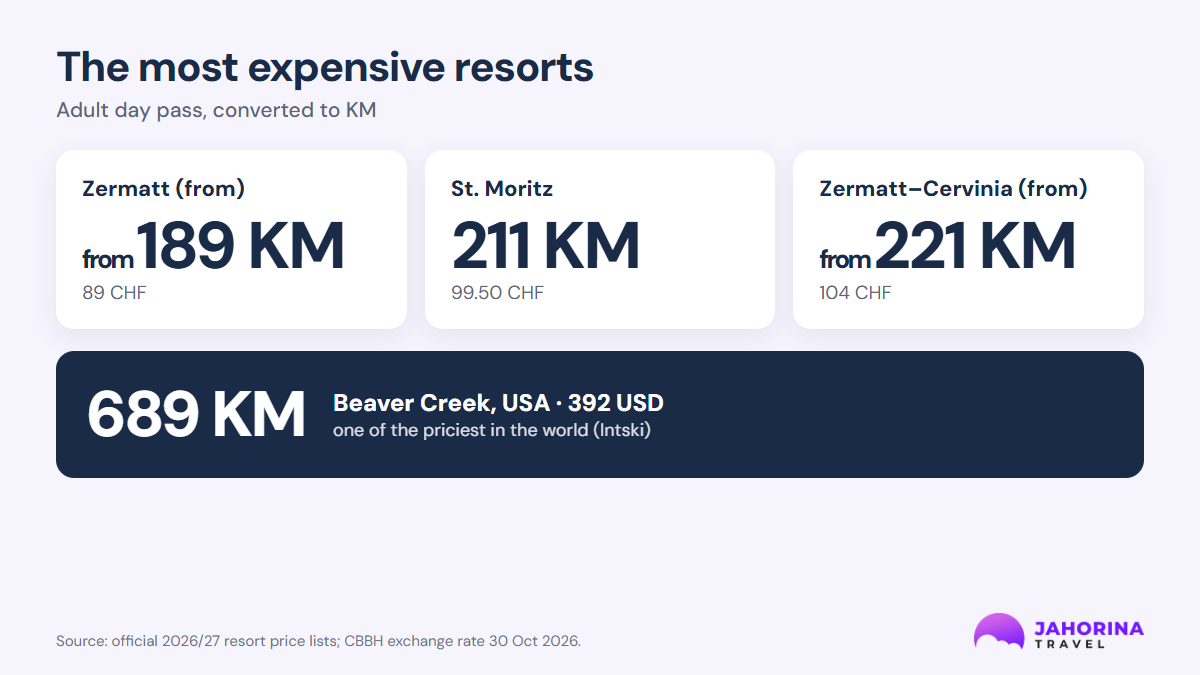
Switzerland still stands out for expensive ski passes. According to the international Intski survey, which compares prices at 255 resorts, St. Moritz is the most expensive European resort in their comparison. The day pass for the Corviglia area is listed at CHF 99.50, or about 211 KM.
In Zermatt a day pass starts at CHF 89, about 189 marks. Anyone who wants the international pass that also includes Italy’s Cervinia must pay at least CHF 104, or about 221 KM. That is a wider ski pass and not the same product as a pass for a single ski sector.
It is important to know that these are the lowest prices. In Zermatt they apply only at the start and end of the season, while in the main part of winter the pass costs more. Prices at some Swiss resorts depend on the date and demand.
Across the Atlantic the figures are even higher. Intski lists a day pass at Beaver Creek in the USA at USD 392, almost 689 KM, and ranks it among the most expensive resorts in the world. Still, such prices matter little to most tourists from the Balkans, for whom European mountains are far more accessible.
How many slopes do you get for your money?
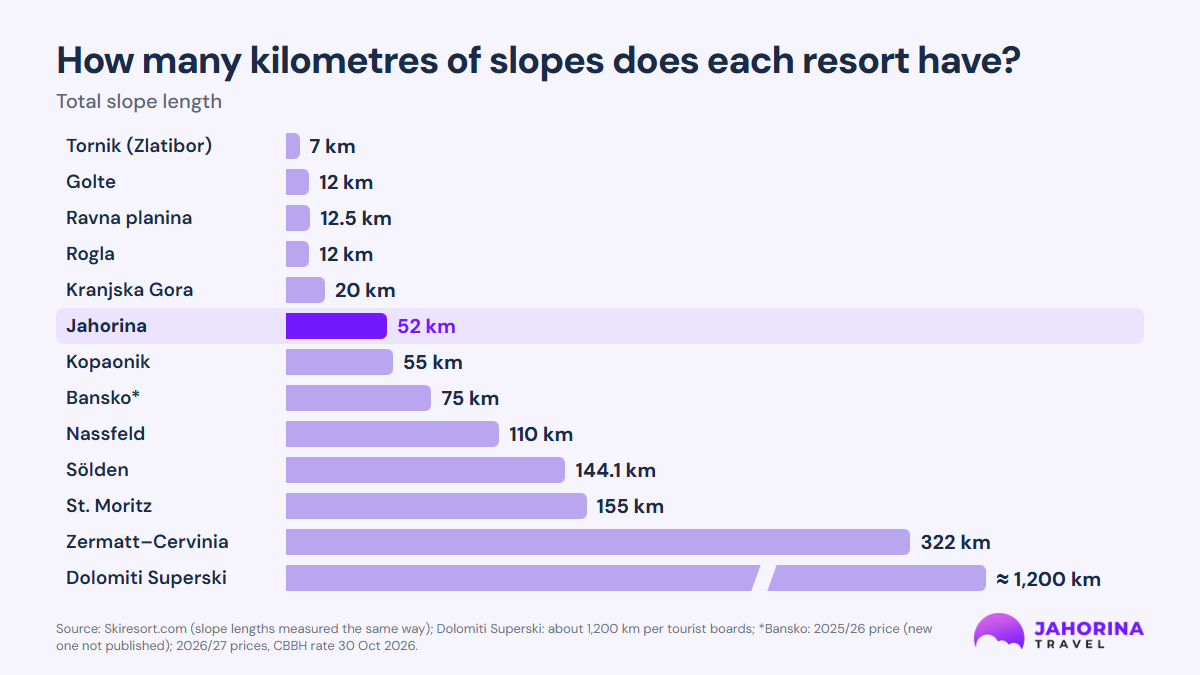
The price of a day pass tells only half the story. The other half is how many kilometres of slopes that pass opens up. To keep the comparison fair, we took slope lengths from a single source, Skiresort.com, which measures them the same way for every resort. That is why the figures may differ from those resorts give in their own promotional material.
By that measure, Jahorina has 52 kilometres of slopes: more than twice Kranjska Gora (20 km) and about four times Rogla, Golte and Ravna planina (12 to 12.5 km). The Alpine resorts are in another league: Nassfeld has 110, Sölden 144, St. Moritz–Corviglia 155 and the linked Zermatt–Cervinia area 322 kilometres. Dolomiti Superski, with one pass for twelve ski areas, covers about 1,200 kilometres of slopes.
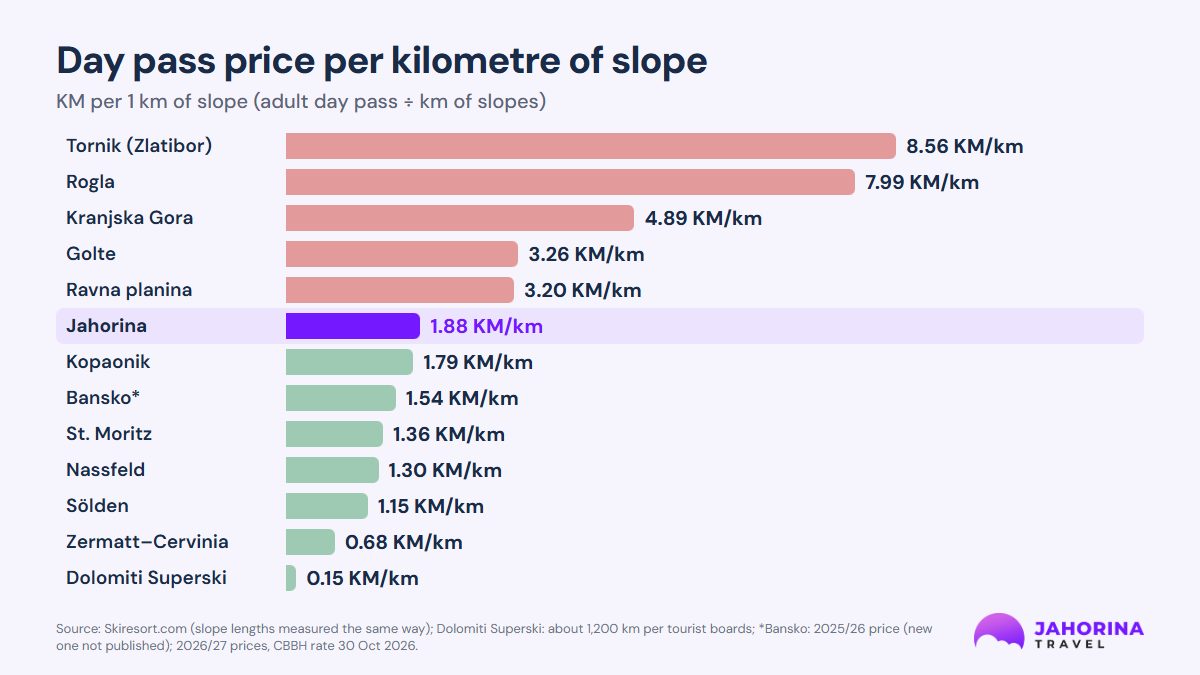
When the price of a day pass is divided by the length of the slopes, the picture changes. One kilometre of slope on Jahorina costs 1.88 KM, cheaper than every Slovenian resort in the comparison: at Rogla it is almost eight marks per kilometre, in Kranjska Gora 4.89, and at Golte and Ravna planina just over three marks. Tornik has the most expensive kilometre in the comparison (8.56 KM). In the region, Jahorina’s closest rival is Kopaonik, whose kilometre of slope is only slightly cheaper (1.79 KM), while Bansko, at last season’s price, comes to 1.54 KM. The large Alpine systems, however, are cheaper per kilometre than Jahorina: St. Moritz 1.36, Nassfeld 1.30, Sölden 1.15, Zermatt–Cervinia 0.68 and Dolomiti Superski just 0.15 KM per kilometre of slope.
| Resort | Slopes | Day pass | KM per km of slope |
|---|---|---|---|
| Golte | 12 km | 39 KM | 3.26 |
| Ravna planina | 12.5 km | 40 KM | 3.20 |
| Tornik (Zlatibor) | 7 km | 60 KM | 8.56 |
| Rogla | 12 km | 96 KM | 7.99 |
| Kranjska Gora | 20 km | 98 KM | 4.89 |
| Kopaonik | 55 km | 98 KM | 1.79 |
| Jahorina | 52 km | 98 KM | 1.88 |
| Bansko (2025/26 price) | 75 km | 115 KM | 1.54 |
| Nassfeld | 110 km | 143 KM | 1.30 |
| Sölden | 144.1 km | 165 KM | 1.15 |
| St. Moritz – Corviglia | 155 km | 211 KM | 1.36 |
| Zermatt–Cervinia | 322 km | 221 KM | 0.68 |
| Dolomiti Superski | about 1,200 km | 174 KM | 0.15 |
Slope lengths: Skiresort.com; Dolomiti Superski: about 1,200 km according to Dolomites tourist boards. Prices per kilometre are calculated from exact KM amounts, before rounding.
This calculation has a limit: few people ski every slope of a large Alpine system in one day. For a family skiing half a day, 12 kilometres may be quite enough. But for an experienced skier spending a whole week on the mountain, the number of kilometres and the variety of slopes become as important as the price of the pass. With the announced expansion by about 40 kilometres of slopes, Jahorina would become even more competitive on this measure.
How long is the season?
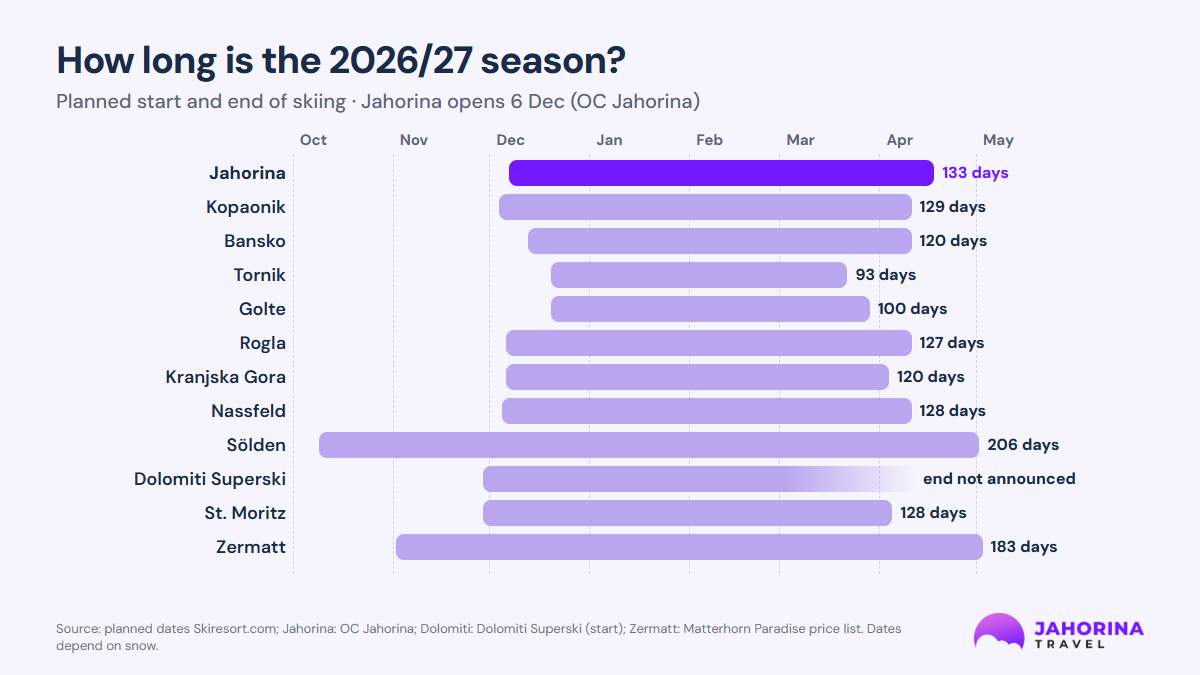
The planned dates for the 2026/27 season show another difference. According to the Olympic Centre, Jahorina opens on 6 December, with skiing planned until mid-April, about 133 days. Last season lasted 139 days. That is on a par with Rogla, Nassfeld and St. Moritz (127 to 128 days), longer than Kranjska Gora (120) and Golte (100 days). In the region, Kopaonik plans about 129 days of skiing, Bansko about 120 and Tornik on Zlatibor about 93.
The high glacier resorts play a different game. Sölden has been open since October and plans skiing until 1 May, about 206 days, while the Zermatt price list offers skiing from 1 November to 2 May. For skiers, this means an Alpine day pass can be used at times when lower mountains still have no snow.
All dates are planned and depend on snow and temperatures. This winter, with a record El Niño and forecasts of a warmer winter, the start of the season at lower resorts could depend on snowmaking more than usual.
What does a family pay?
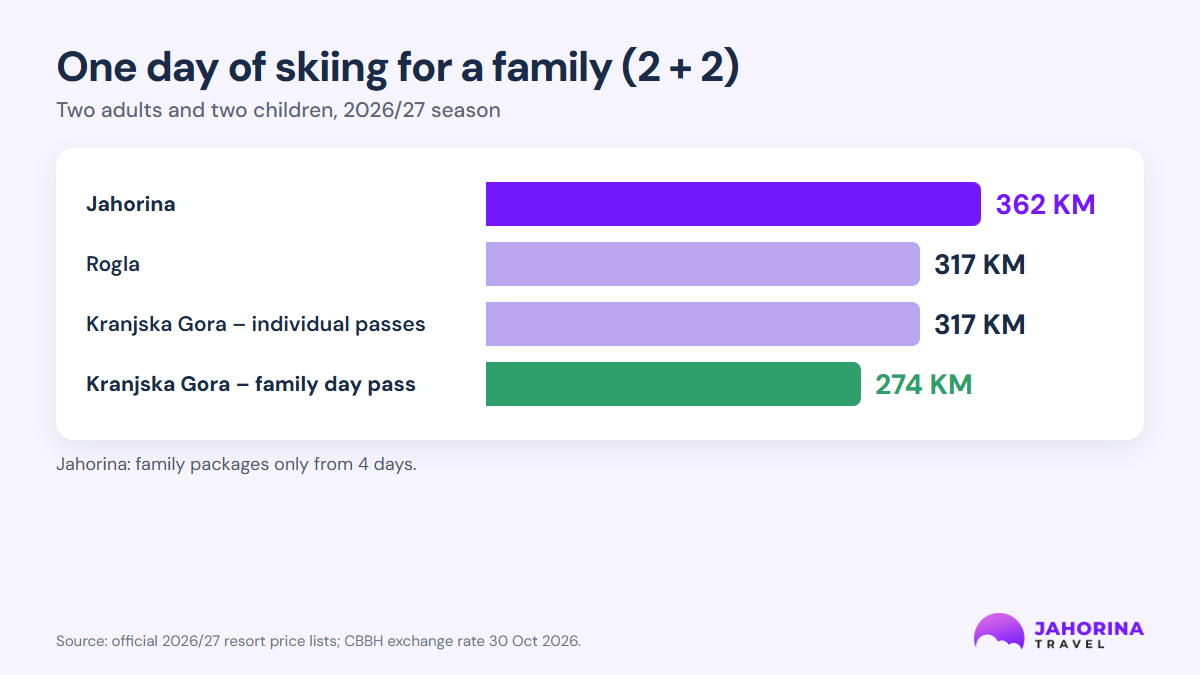
The price of one day of skiing becomes especially interesting when a family trip to the mountain is calculated.
On Jahorina, two regular adult day passes and two children’s passes would cost 362 KM in total, without additional discounts. The Olympic Centre does offer family packages, but only for stays of four days or more.
In Kranjska Gora, the same number of individual passes for two adults and two children costs €162 in total, or about 317 KM. The same amount applies at Rogla. Kranjska Gora, however, also offers a family day pass for two adults and two children at €140, about 274 KM, which is almost 90 marks less than on Jahorina.
Of course, this calculation does not include differences in age categories, other discounts or travel costs. It does, however, show why the price of a ski pass cannot be viewed only from the perspective of a single adult skier.
For a family travelling from Sarajevo to Jahorina for a day, transport costs will be much lower than for a trip to Slovenia. For a family already staying in Slovenia, the calculation could look quite different.
Is Jahorina really cheap?

Based on these figures, it would be hard to claim that Jahorina is among the cheapest ski resorts in Europe. There are smaller resorts in Slovenia and the region where you can ski for noticeably less money. Some well-known Slovenian resorts have already reached almost the same price level as Jahorina, and with dedicated passes they are even better value for families. Kopaonik, the main rival in the region, offers a similar number of kilometres of slopes for the same price.
But the comparison with Austrian, Italian and especially Swiss resorts shows that Jahorina can still offer a cheaper ski pass than many well-known Alpine destinations.
What the price list does not show are the kilometres of road, tolls, fuel, accommodation, time spent queuing for lifts, the quality of slope preparation and the number of days the resort actually operates at full capacity.
For tourists from Bosnia and Herzegovina, Jahorina has the advantage of proximity. For guests from abroad, it is one way to spend a winter holiday at lower cost than in much of the Alps.
But that advantage is not unlimited. The closer prices get to European levels, the higher guests’ expectations become.
In the end, a skier does not just buy a lift pass. They pay for a day on the mountain. And how much that day was worth is usually judged only after getting back home.
See all Jahorina prices in the OC Jahorina 2026/27 price list, and before you set off, check the live slope status.