


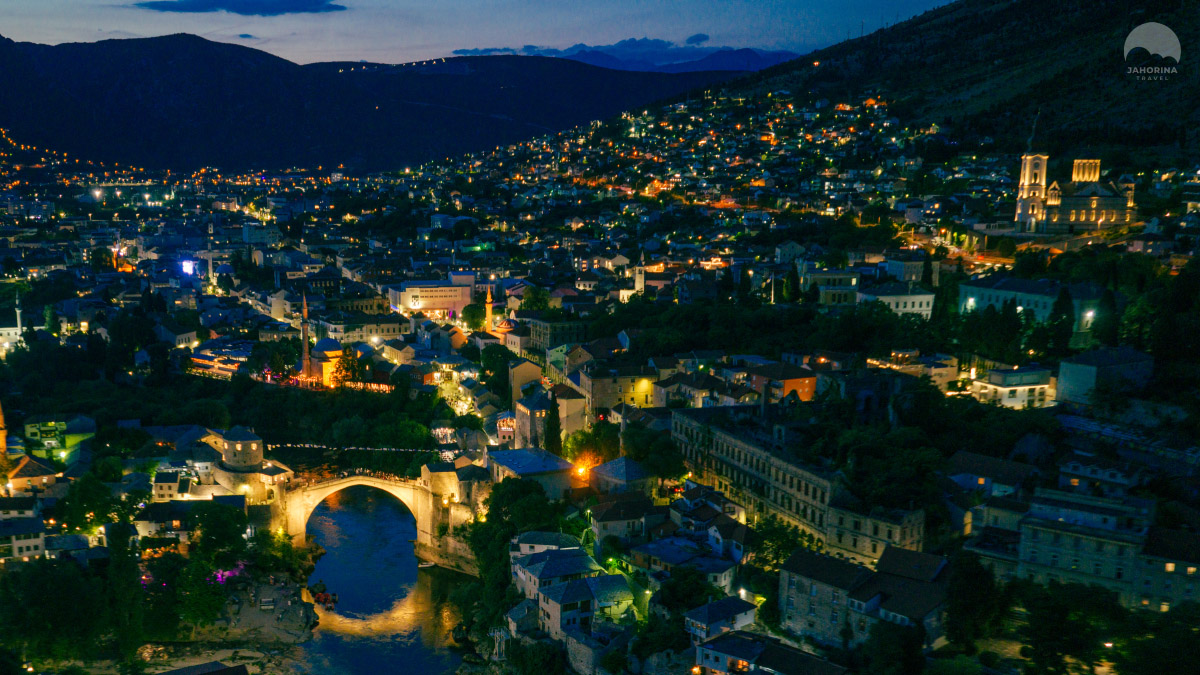
When someone mentions Mostar, almost everyone immediately thinks of the Old Bridge. The elegant stone arch spanning the emerald-green Neretva River has become the city’s symbol and one of the most photographed landmarks in the Balkans. Yet, just a few minutes’ walk from the narrow cobbled streets of the old town stands a remarkable building that often leaves visitors asking the same question: How is it possible that so few people know about this place?
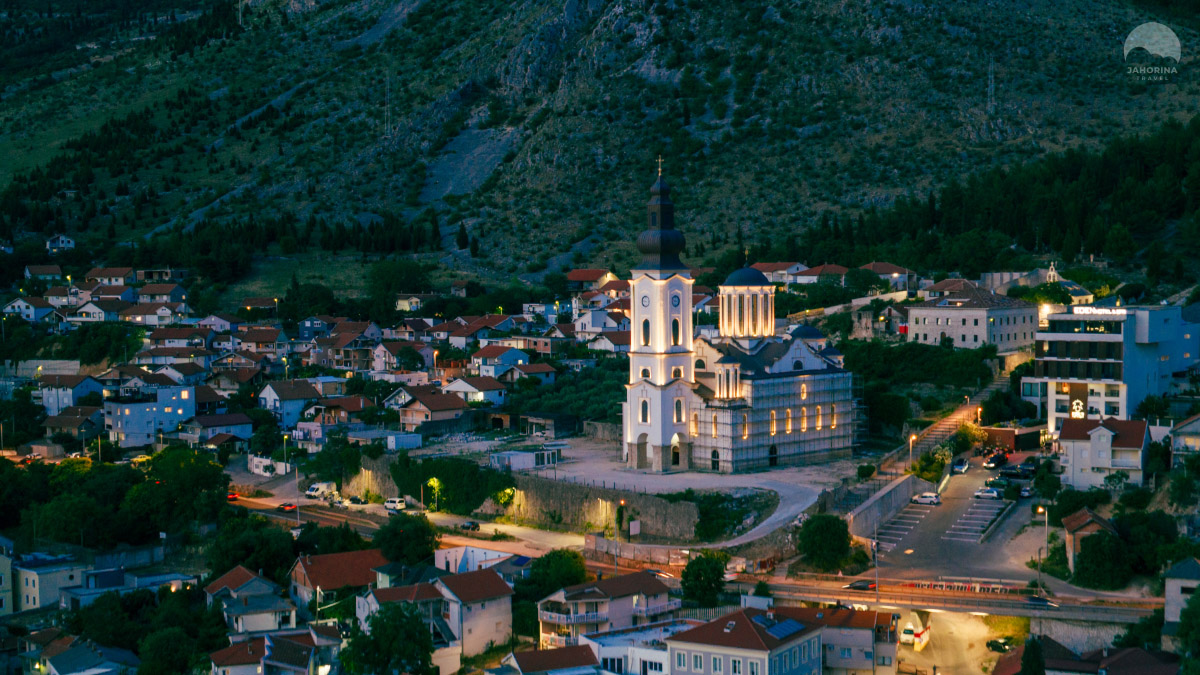
Rising above Mostar on a hill that offers one of the city’s most spectacular panoramic views is the Cathedral of the Holy Trinity. Its story is far more than the history of a single church. It is a story of Mostar’s prosperity in the 19th century, outstanding craftsmanship, remarkable art, destruction, and ultimately, rebirth.
A Cathedral Built to Impress
During the mid-19th century, Mostar experienced a period of rapid growth and prosperity. Serbian merchants ranked among the city’s most influential and wealthiest citizens. In 1856, they built an impressive two-story school building, one of the largest structures in Mostar at the time. But they had an even greater ambition.
They were not looking for a hidden location tucked away between houses.
Quite the opposite.
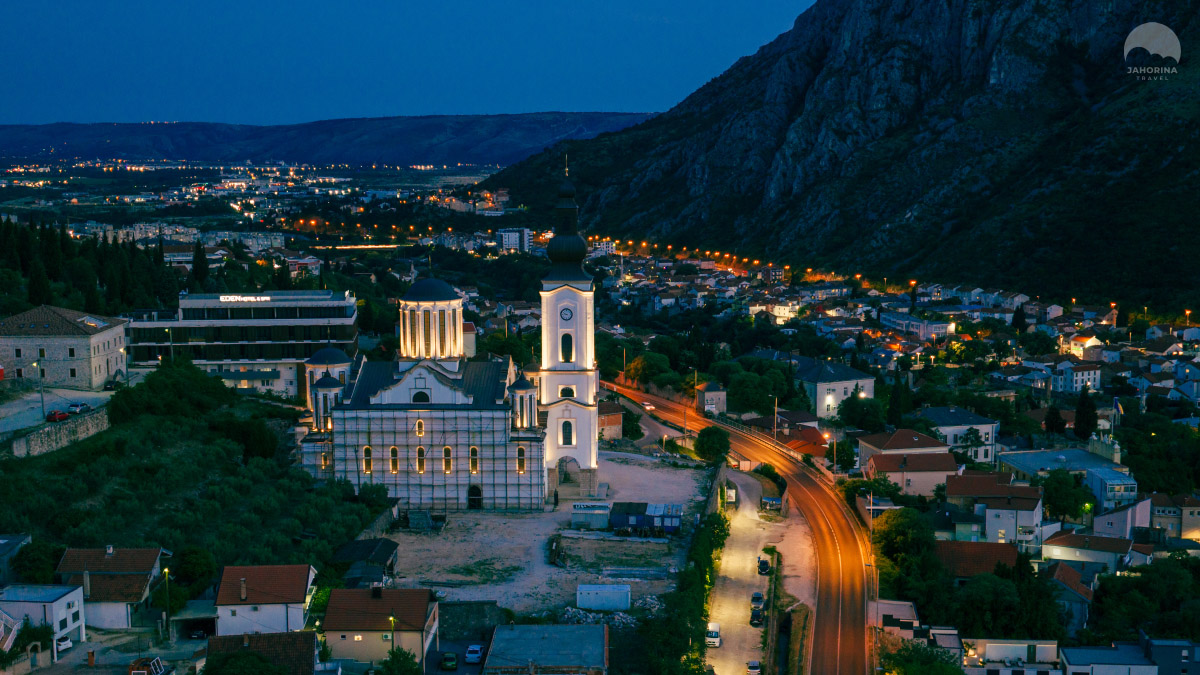
They chose Perkovina, a hill overlooking the city, ensuring that the new cathedral would be visible from nearly every part of Mostar. It was a bold statement that they were creating something designed to stand the test of time.
When the foundation stone was laid on March 15, 1863, few could have imagined that it would become one of the most magnificent Orthodox cathedrals of its era.
The Construction Mistake That Changed Everything
Construction did not go according to plan.
The original builder, Spasoje Vulić from Tetovo, was already well known for constructing the Church of St. Nicholas in Foča. However, serious structural problems soon emerged. Massive columns began to crack, putting the entire project at risk.
Rather than abandoning their dream, the people of Mostar turned to one of the greatest Balkan master builders of the 19th century – Andrey Damyanov.
His arrival changed everything.
Damyanov did far more than repair the damaged structure. He redesigned sections of the cathedral, introduced elegant decorative features, and transformed it into an architectural masterpiece that would inspire travelers, architects, and historians for generations.
Today, many believe that his vision is precisely what gives the Cathedral of the Holy Trinity its monumental appearance.
When One Cathedral Connected Three Worlds
Perhaps the most fascinating part of its story is the way it was built.
Most of the construction was financed by Serbian merchants from Mostar, while Ottoman Sultan Abdul Aziz contributed approximately 100,000 groschen. The Russian Emperor donated an elaborately embroidered ceremonial shroud, and numerous benefactors helped furnish the cathedral.
Few buildings in the Balkans carry the legacy of so many different cultures and civilizations.
At a time when empires frequently clashed, this remarkable cathedral was brought to life through the contributions of people from different nations, religions, and traditions.
An Artistic Treasure Few Places Could Match
Visitors were amazed not only by the cathedral’s impressive size.
Its interior was a true masterpiece of religious art.
The cathedral housed priceless icons dating from the 16th to the 18th century, including works by Cretan, Greek, Russian, and local icon painters. Its magnificent hand-carved wooden iconostasis, believed to have been created by Andrey Damyanov and his workshop, was considered one of its greatest artistic treasures.
Every icon told its own story.
Together, they formed one of the most valuable collections of Orthodox religious art in Bosnia and Herzegovina.
The Day Mostar Lost Part of Its Soul
Everything changed during the summer of 1992.
The cathedral was shelled.
It was then set on fire.
Finally, explosives reduced much of the building to rubble.
Its domes, bell tower, iconostasis, and a significant part of its priceless artistic heritage disappeared in just a few days.
For many residents of Mostar, it was far more than the destruction of a building.
It was the loss of a part of the city’s identity.
The Return of a Mostar Landmark
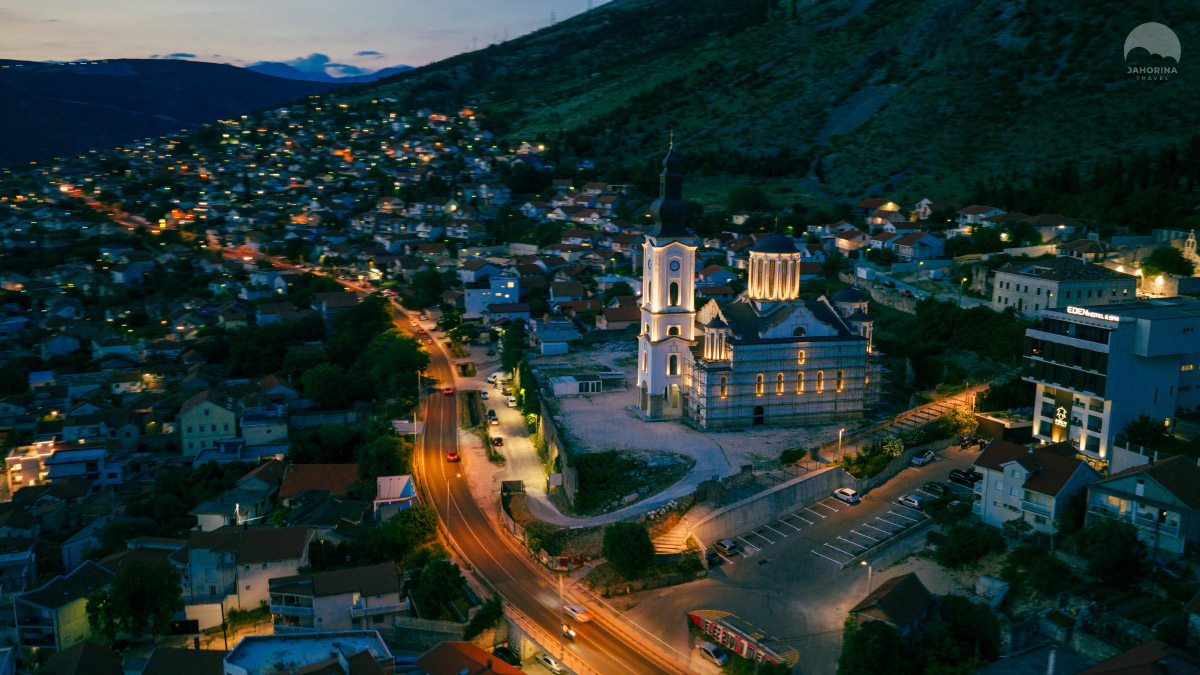
Today, more than three decades later, the Cathedral of the Holy Trinity once again rises proudly above Mostar.
Its domes once again shape the city’s skyline, just as they did more than 150 years ago.
Although restoration is still ongoing, the cathedral has already become one of the most powerful symbols of cultural heritage, resilience, and renewal.
Many visitors who come to see the Old Bridge never take the extra few minutes to walk up to Perkovina.
Yet this is where Mostar reveals a completely different face.
From the cathedral plateau, you’ll enjoy sweeping views of the old town’s stone rooftops, the emerald Neretva River, and the surrounding hills. It is here that you realize Mostar is far more than a single bridge.
It is a city of layers, where different cultures, religions, and centuries intertwine to create stories waiting to be discovered.
So, the next time you visit Mostar, don’t stop at the Old Bridge.
Walk just a little farther.
You may discover at the Cathedral of the Holy Trinity a story that will stay with you far longer than any photograph taken at Bosnia and Herzegovina’s most famous landmark.
0 Comment