


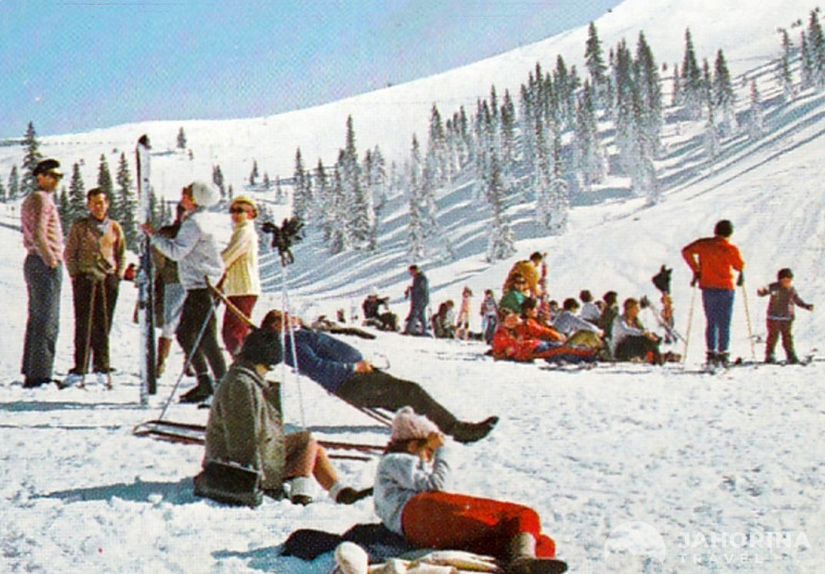
Back in the days when the lines for ski lifts were longer than the slopes, and the smell of hot tea spread from wooden lodges over the snow-covered pines, Jahorina lived its golden age.
The 1970s were a time when this mountain breathed deeply — when generations grew up on its slopes, learning that skiing was not a competition, but pure joy.
The revived postcards from that era, brought to life in a video published on the Jahorina Travel YouTube channel, take us back to a simpler and warmer world. They capture everything that made the old Jahorina unforgettable: the queues of skiers at Olimpik, the colorful overalls of Rajska Dolina, the Skočine chairlift climbing into the endless whiteness, and the hotels that defined the spirit of the mountain — Šator, Rajska Dolina, and hotel Jahorina.
Those were the days when ski gear was heavier, but smiles were lighter. When every lift ride meant a new friendship, and every descent felt like freedom. The hotels, built of stone and wood, blended perfectly into the landscape, offering warmth to visitors arriving from all across Yugoslavia. Rajska Dolina truly lived up to its name — a paradise where sport, nature, and youth came together in harmony.
Jahorina of that time was also a symbol of architecture that respected the mountain. Buildings were not meant to dominate nature, but to belong to it. The Bistrica Hotel, the modern marvel of the late 1970s, marked the beginning of the Olympic era that would soon place Jahorina on the world map. From its terraces, one could gaze toward Prača and the sea of snow-covered forests, while skiers relaxed and soaked up the winter sun.
The video of these revived postcards is more than a collection of images — it is a collection of memories. It reminds us of a time when winters seemed longer, when people came to Jahorina out of love, and left with a promise to return. The sound of the lift, the crunch of snow under ski boots, the chatter from the hotel terrace, and the scent of pine trees — all come alive again through these frames.
Jahorina in the 1970s wasn’t just a mountain. It was a feeling — a symbol of a time when snow, friendship, and simplicity meant more than luxury or speed. Today, as we watch those scenes, we are reminded that the true spirit of this mountain lies in that emotion — in the bond between people, nature, and memory that never fades.
0 Comment